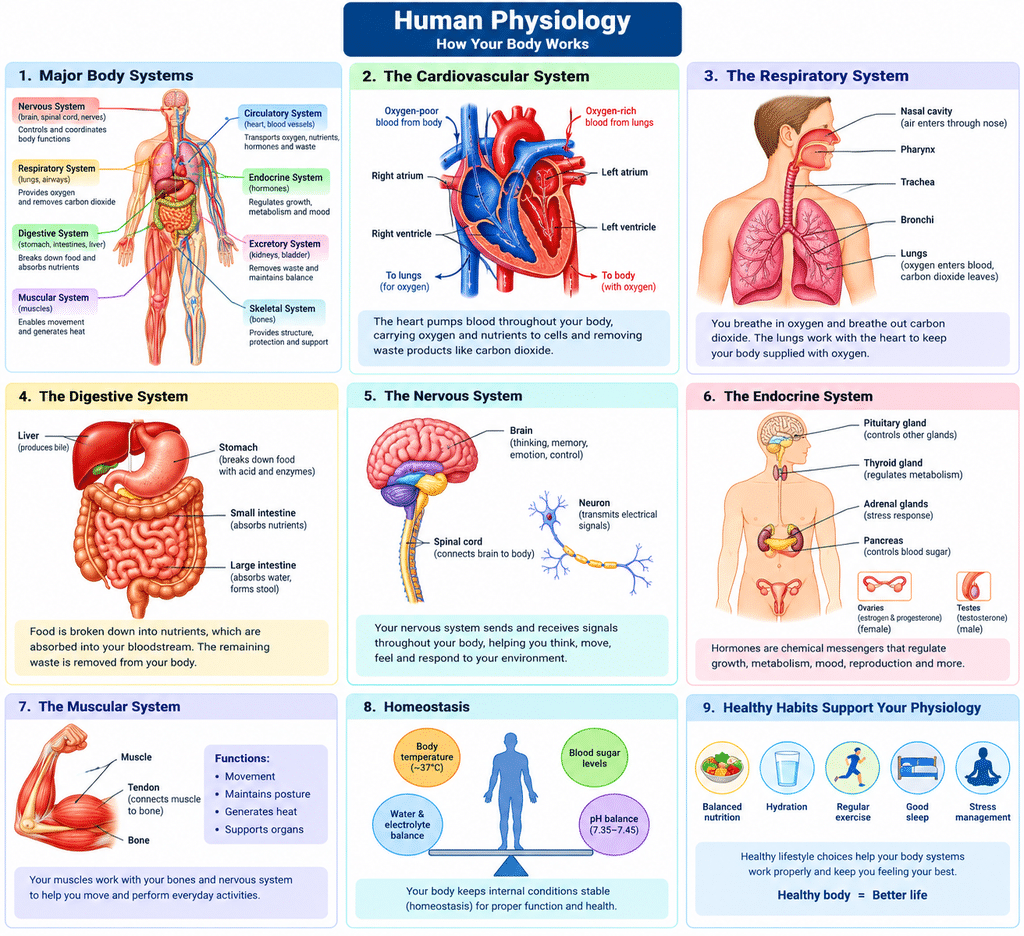
Human physiology is the scientific study of how the organs, tissues, and cells of the human body function and interact to maintain life. While anatomy focuses on the structure of the body, physiology focuses on the mechanisms and processes that keep us alive, moving, and thinking.
A core concept in physiology is homeostasis—the body’s ability to maintain a stable internal environment (like regulating body temperature, blood pressure, and pH levels) despite changes in the outside world.
Major Physiological Systems
The body achieves homeostasis through several interconnected organ systems:
- Nervous System: The control center. The brain, spinal cord, and nerves send and process electrical signals to coordinate thoughts, movements, and bodily functions.
- Cardiovascular System: The transport system. The heart pumps blood through blood vessels to deliver oxygen and nutrients to tissues while removing waste products.
- Respiratory System: The gas exchange system. The lungs take in oxygen from the air and expel carbon dioxide.
- Digestive System: The processing plant. Breaks down food into nutrients that the body uses for energy, growth, and cell repair.
- Musculoskeletal System: The framework and engine. Bones provide structure and protection, while muscles contract to enable movement.
- Endocrine System: The chemical messenger system. Glands release hormones into the bloodstream to regulate metabolism, growth, and mood.
- Immune System: The defense network. Protects the body against pathogens, infections, and disease.
Medical Disclaimer:
The information provided above is for educational and informational purposes only and is not intended as a substitute for professional medical advice, diagnosis, or treatment. Always seek the advice of your physician or other qualified health provider with any questions you may have regarding a medical condition.